
KBK Recipes
Better-Than-Rao Marinara Sauce
KBK Better-Than-Rao Marinara Sauce
Eeek - can I say that?!? I've been working on a delicious, easy homemade marinara sauce for YEARS. And yes, *this* is the one..
Recipe: Better-Than-Rao Marinara Sauce
Super Easy Better-Than-Rao Marinara
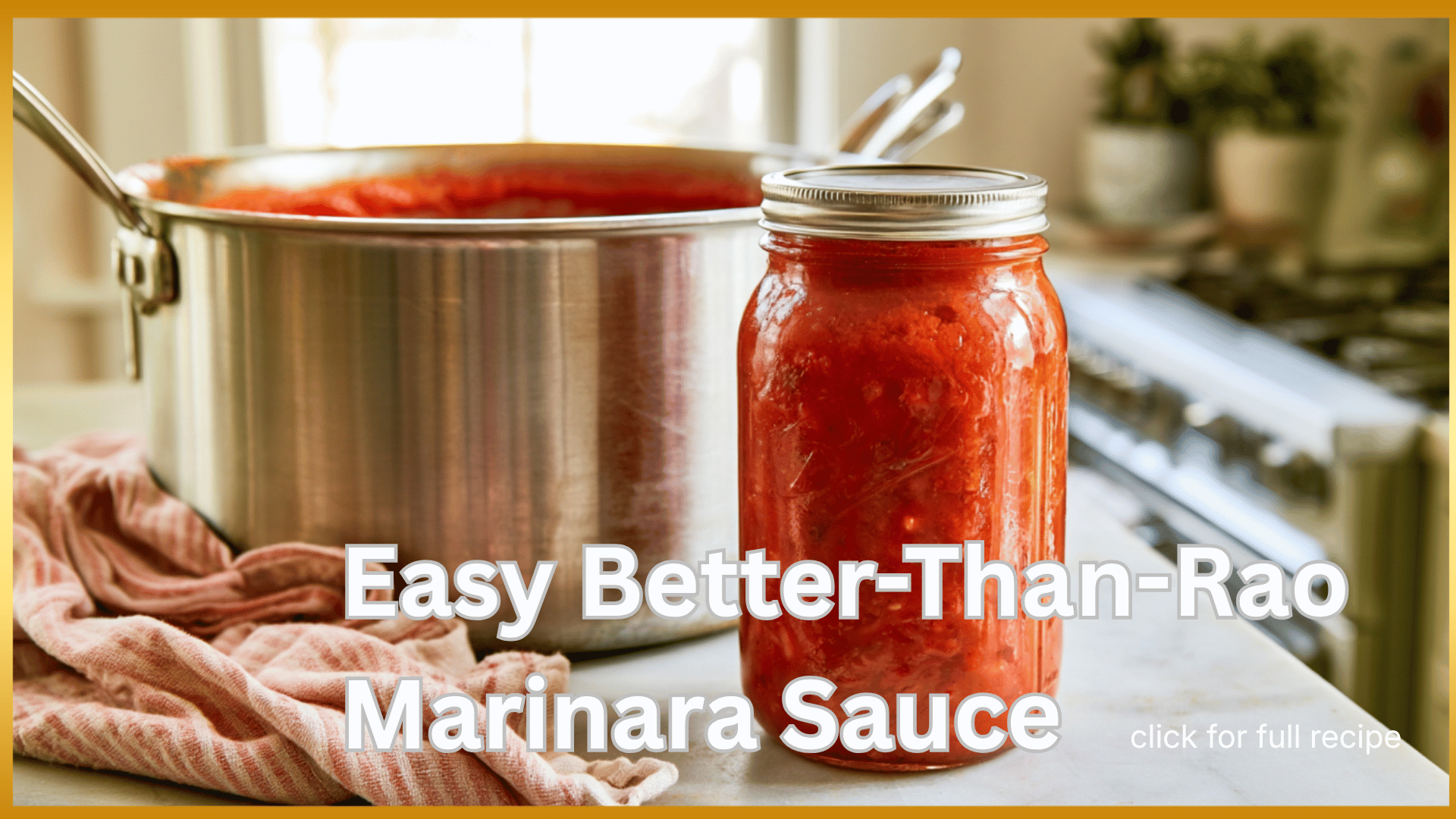
Notes: I usually triple or quadruple this recipe and freeze extra in 32 oz. mason jars for later
Ingredients:
- 3 tablespoons olive oil
- ½ cup yellow onion, finely-diced (about ½ medium or 1 small)
- 1 teaspoon kosher salt, divided
- 4 cloves garlic, pressed or finely-minced
- ¼ teaspoon dried oregano
- ¼ teaspoon freshly-ground black pepper
- 1 (28-ounce) can of whole tomatoes with juices (San Marzano if possible)
- 6 leaves fresh basil leaves, torn
Instructions:
-
Pour the whole tomatoes along with the juices into a medium bowl. Using clean hands or a potatoe masher, squeeze the tomatoes until they are all crushed into small pieces. Set aside.
-
Heat a medium pot over medium heat. Add the olive oil, the onion, and ¼ teaspoon of the salt. Cook the onions until translucent but not browned, about 5-7 minutes, stirring frequently.
-
Add the garlic, oregano, and pepper. Cook until fragrant, about 1 minute, stirring constantly.
-
Add the crushed tomatoes (with their juice), the remaining ¾ teaspoon of salt, and half of the torn basil leaves.
-
Cover and simmer on low for 20 minutes, stirring occasionally.
-
Remove the cooked basil leaves, and use immediately or allow to cool and store in the fridge for up to 5 days or freeze for up to 3 months.
-
Serve with remaining fresh basil, thinly sliced.
- If you prefer a smooth sauce, use an immersion blender & blend to desired consistency. For a rustic sauce, leave as is!
How does this Recipe Kick Butt?
I'll be honest, most commerical marinara sauces aren't horrible in terms of nutrition. In fact, in a pinch, I'll still buy Rao's. But it's pricey. And, what's more, making your own gives you the opportunity to use real, fresh foods that flood your body with nutrients - living, amazing, nutrients. Here's the details...
What's Really in Your Jarred Marinara? A Bottle-vs-Homemade Breakdown
Marinara feels like it should be the "safe" jarred sauce — it's just tomatoes, right? Not exactly. A lot of mainstream jarred marinara has drifted just as far from real food as your average BBQ sauce or salad dressing, it's just easier to miss because tomato sauce still looks and tastes recognizably like tomato sauce.
Pull a jar of a typical grocery-store marinara and read the label. You'll often find added sugar sitting a few ingredients in (sometimes as sugar, sometimes as corn syrup), a seed oil like soybean or canola oil instead of olive oil, citric acid added to standardize acidity and shelf-stability rather than for flavor, and a sodium count that's frequently double what you'd use making the same amount at home. Some brands also lean on "natural flavors," instead of anything you'd recognize as an actual aromatic vegetable.
My marinara uses eight ingredients, most of which you probably already have in your kitchen, and it takes about 30 minutes start to finish. So, let it simmer while you do other stuff. Here's how each ingredient will make you a kick butt superstar while feeling like an accomplished chef.
San Marzano Tomatoes vs. Commodity Tomato Concentrate
This recipe calls for whole canned tomatoes, San Marzano if you can get them, and that's not just an Italian-food snob preference. Whole canned tomatoes are picked ripe and canned close to harvest, which preserves more of their naturally occurring lycopene — the carotenoid responsible for tomatoes' red color and one of the more well-studied antioxidants for cardiovascular and prostate health. Cooking tomatoes actually increases the bioavailability of lycopene, so a simmered homemade sauce is genuinely one of the better ways to get it into your diet. Commercial marinara, by contrast, is often built from tomato concentrate or paste that's been through multiple heat-processing and reduction steps before it even reaches the jar, and is frequently diluted with water and thickeners to hit a target volume and texture rather than concentrated tomato flavor.
Olive Oil vs. Soybean or Canola Oil
Three tablespoons of olive oil sounds almost too simple to matter, but the oil you cook onions and garlic in sets the fatty acid profile for the whole sauce. Olive oil is predominantly monounsaturated fat, and diets higher in monounsaturated fat relative to omega-6 seed oils are consistently associated with more favorable cholesterol markers and lower cardiovascular risk. Extra virgin olive oil also carries polyphenols — plant compounds with antioxidant activity that simply aren't present in a refined soybean or canola oil. When a jarred sauce swaps in a cheap seed oil, you're not just losing flavor, you're shifting the fat profile of every bowl of pasta that sauce touches toward a more omega-6-heavy, more inflammatory-leaning balance.
No Added Sugar, Because Real Tomatoes Don't Need It
A lot of commercial marinara brands add sugar to round out acidity and make the sauce more universally palatable, especially for kids. It works, but it also means you're getting a dose of added sugar in something that reads as a savory, healthy staple. My recipe has zero added sugar. The sweetness comes entirely from the tomatoes themselves and from cooking the onion low and slow until it's naturally translucent and sweet — that 5 to 7 minute onion step isn't just for texture, it's doing real flavor-building work that a jarred sauce skips by adding sugar directly instead.
Fresh Garlic and Basil vs. Powders and "Flavor"
Four cloves of fresh, pressed garlic bring allicin, a sulfur compound formed when garlic is crushed, which has been studied for its cardiovascular and immune-supportive properties. That compound degrades quickly and is largely absent in the dried garlic powder many commercial sauces rely on for cost and shelf-life reasons. Fresh basil, torn and added at two points in the cooking process, contributes volatile aromatic oils that simply don't survive the high-heat, long-shelf-life processing jarred sauces go through — which is part of why homemade marinara smells like an actual Italian kitchen and jarred sauce smells like, well, jarred sauce.
Real Salt
This recipe uses kosher salt, added in two stages so it seasons the onions while they cook and then rounds out the whole sauce at the end. That's a modest, intentional amount. Commercial marinara sauces are frequently much higher in sodium per serving — partly for flavor, partly because sodium plays a preservation role in shelf-stable jarred products. The real issue is processed salt-like ingredients instead of real salt. When you make it yourself, you're seasoning to taste and choosing the ingredients.
The Full Knock Out
Marinara is truly a nutrition superstar when made with real, whole-food ingredients. This genuinely healthy & easy version takes about half an hour, most of which is hands-off simmering time, and it costs you almost nothing in convenience if you do what I do and just make a triple batch to freeze. You end up with a sauce built from whole tomatoes, real olive oil, fresh aromatics, and controlled salt — not tomato concentrate, seed oil, added sugar, and citric acid standing in for actual quality.
Make a big batch, freeze it in mason jars, and you've got real marinara on hand for months — no label-reading required.