
KBK Recipes
Homemade Avocado Oil Mayo
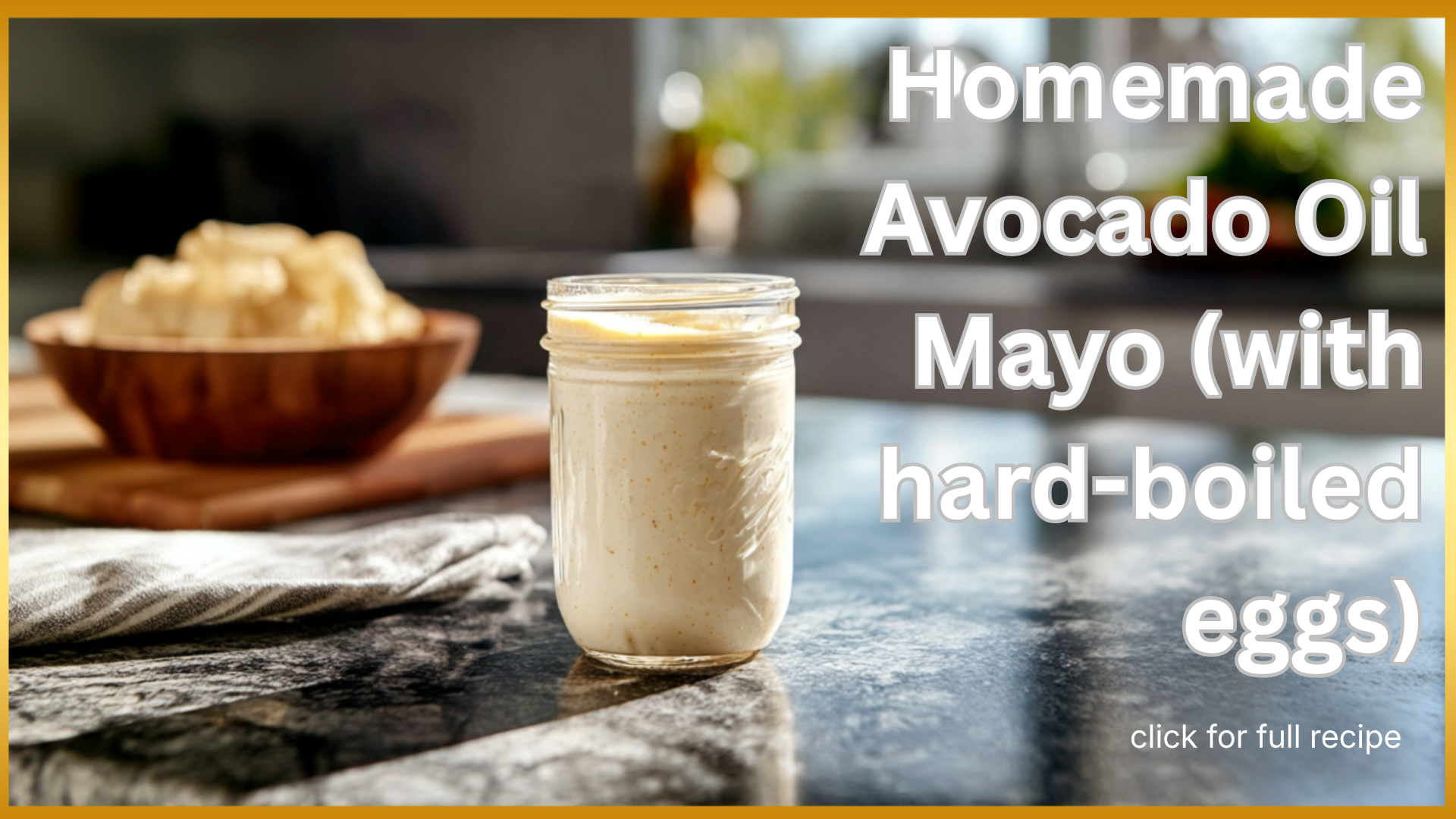
KBK Homemade Avocado Oil Mayo
In all honesty, this recipe came forth because good avocado mayo is EXPENSIVE. And I love aoili, so we use a fair amount. There are good ones on the shelf. Then again, there are HORRIBLE mayos, TRICKY mayos, and downright scary ones.
Recipe: Homemade Avocado Oil Mayo
Ingredients:
-
- 3 hard-boiled eggs, cooled & peeled
- 1/2 cup avocado oil or olive oil
- 2 tablespoons lemon juice
- 1 tsp dijon mustard
- 1/2 tsp salt (adjust to taste)
Instructions:
-
Place all ingredients in a food processor or blender. Blend mixture continuously until it's smooth.
How does this Recipe Kick Butt?
I mean, just look at it. Only a handful of really-good-for-you ingredients. On the other hand...
What's Really in Your Mayo? A Bigtime Breakdown
Mayo might be the most quietly problematic condiment in the fridge, simply because nobody thinks twice about it. It's white, it's creamy, it goes on sandwiches — how bad could it be? In fact, most people think it's dairy. But it's not. And it's pretty bad, actually, once you look at what most jars are made of. Even the ones marketed as the "better" option are often not telling you the whole story.
Flip over a jar of conventional mayo and soybean oil is almost always the very first ingredient — meaning it's the single largest component of the product by weight, more than the eggs, more than anything else. That's true across most of the big national brands. It's cheap, shelf-stable, and flavor-neutral, which makes it great for manufacturers and not particularly great for you.
My homemade mayo uses five ingredients and a food processor, and I want to walk through exactly why it's a meaningfully different product than what's in that jar — including one substitution trick that a lot of "healthier" mayo brands are pulling that you should know about.
The Soybean Oil Problem
Soybean oil is worse than you likely think. Soybeans? Great. Soybean oil? Not close to great; closer to toxic. It is extremely high in omega-6 fatty acids (specifically linoleic acid), and since we already get more than enough omega-6s from real foods like vegetables, grains, and meats, we certainly don't need an isolated liquid form in all our foods. We get way more omega-6 than omega-3 thanks to how often seed oils show up across the processed food supply — mayo, salad dressing, crackers, breads, frozen meals. That imbalance matters because omega-6 and omega-3 fats compete for the same metabolic pathways and get converted into different families of signaling molecules in the body, with the omega-6-derived ones tending to skew more inflammatory. You need some omega-6 — it's not the enemy — but when a condiment you're using multiple times a week is 60-80% soybean oil, it's adding up in a direction most of us don't need more of.
The "Olive Oil Mayo" Trick
Here's the part that catches a lot of people off guard: if you've been buying a jar labeled "olive oil mayo" thinking you've solved the soybean oil problem, check the ingredient list again. In most commercial versions, olive oil is not the primary oil — it's blended with soybean or canola oil, and olive oil often shows up second or third on the list, sometimes making up as little as 15-20% of the total oil content. The front label is doing a lot of marketing work that the back label quietly contradicts. You're paying a premium for a product that's still mostly the same seed oil base, just with a small amount of olive oil added so the word "olive" can go on the front.
My recipe skips that sleight of hand entirely. It's ½ cup of avocado oil or olive oil — full stop, 100% of the fat, nothing blended in to cut costs. If you use olive oil, you get the monounsaturated fat profile and polyphenol content that's been consistently linked to better cardiovascular markers compared to a seed-oil-heavy diet. If you use avocado oil, you get a similar monounsaturated fat base with a more neutral flavor. Either way, what's on the ingredient list is what's actually in the jar, in the amount you'd assume.
Hard-Boiled Eggs vs. Industrial Emulsifiers
Traditional mayo is an emulsion of egg and oil, and that's exactly what this recipe is — three hard-boiled eggs doing the emulsifying work, plus contributing real protein, choline (important for liver and brain function, and a nutrient most people don't get enough of), and fat-soluble vitamins like A and D. Some commercial mayo brands use whole eggs or egg yolks as their emulsifier too, which is fine, but plenty of "lite" or shelf-stable versions lean on modified food starches, gums, or other stabilizers to hold the emulsion together over a long shelf life instead. Using hard-boiled eggs specifically (rather than raw, which is more traditional) also means you get a mayo that's food-safety-friendly for things like pregnancy or serving to kids, without needing any pasteurized-egg workaround.
Lemon Juice and Dijon vs. Preservative Acids
The acidity in this recipe comes from two tablespoons of fresh lemon juice and a teaspoon of Dijon mustard, both of which are doing real flavor work in addition to helping the emulsion come together and stabilizing pH. Commercial mayo typically uses vinegar or straight-up EDTA and calcium disodium as preservative and stabilizing agents to extend shelf life to the many months a jar sits on a store shelf. Fresh lemon juice also brings a bit of vitamin C to the mix, which added preservative acids obviously don't.
Salt that's real salt
Commercial versions are often saltier, and even made with MSG or not-real-salt-sources. Instead, you can be a home cook and choose your salt, and to taste. Yours doesn't need shelf stability for a product that's meant to survive unrefrigerated on a store shelf for YEARS before you even buy it.
The Full Knock-Out
Mayo doesn't have to be a soybean-oil delivery vehicle, and "olive oil" on the front of the jar doesn't automatically mean olive oil is what you're getting. This homemade version takes about five minutes in a food processor, uses real eggs and real oil in real proportions, and gives you a fat profile that's actually working in your favor instead of quietly stacking more omega-6 onto an already-tilted diet.
Make a batch, keep it in the fridge for your sandwiches, dressings, and dips this week. It's truly healthful! You'll never look at that jar in the mayo aisle the same way again.